Overview
Developed a high-fidelity VR simulation replicating ultrasonic immersion testing (UTI) — a critical non-destructive testing technique used in industries like aerospace, manufacturing, and defense. This simulation allowed trainees to perform virtual probe alignment, data acquisition, and defect detection without using expensive machinery or real test materials, increasing safety and scalability in training.
Key Responsibilities
- •
Lead Unity Developer – VR Simulation & Data Visualization: Architected and developed the core simulation systems, replicating real-world ultrasonic immersion hardware including probe movement, tank behavior, part fixtures, and scanning workflows.
- •
Probe Mechanics & Collision Handling: Programmed real-time probe movement in 3D space based on physical constraints. Simulated crash scenarios triggered faults and corrective feedback workflows to mimic real-world safety procedures.
- •
UI & Software Screen Simulation: Recreated proprietary ultrasonic software interfaces in VR — including control panels, forms, scan triggers, and parameter tuning — for realistic hands-on training without software licensing.
- •
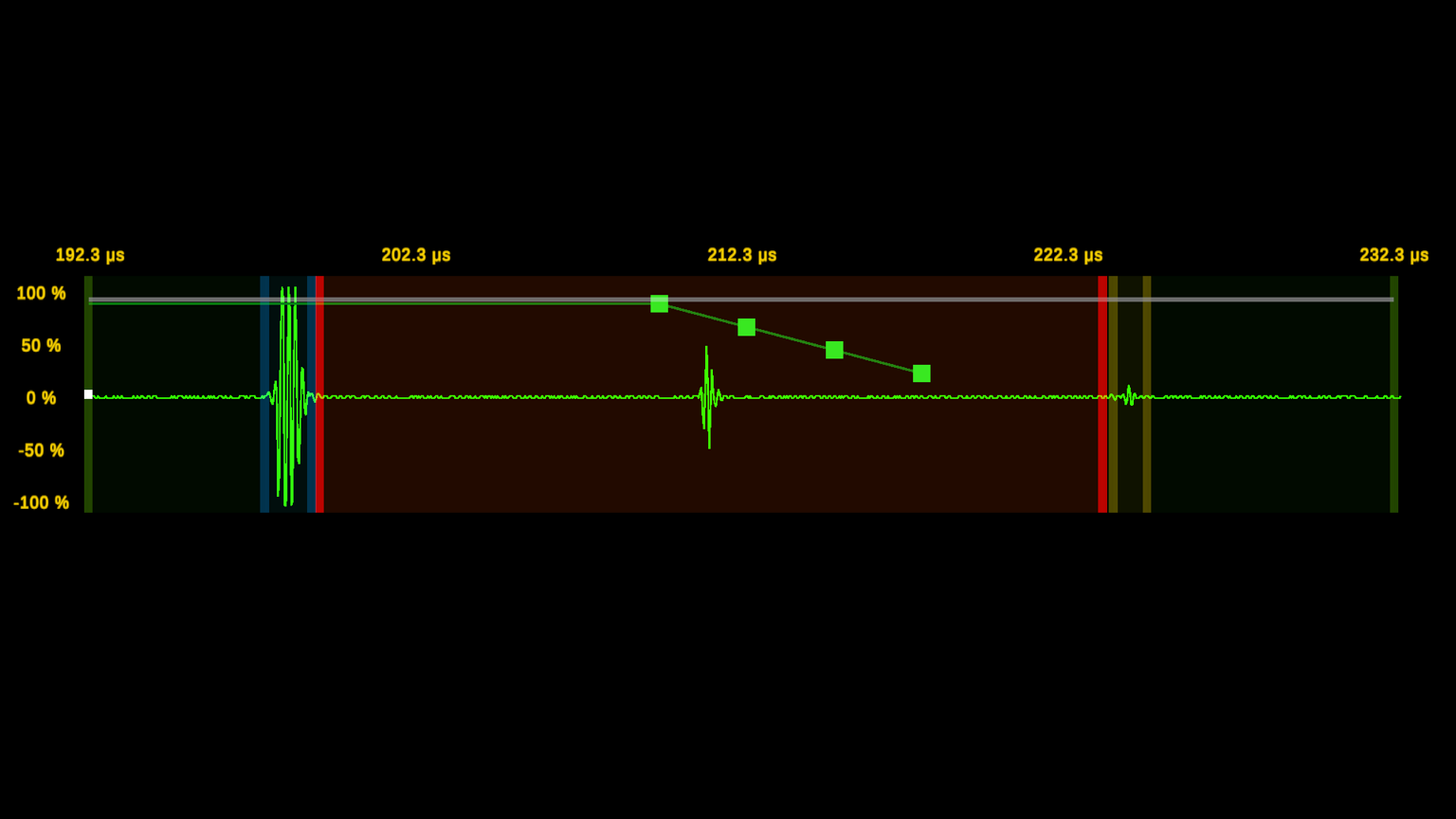
Real Data Integration & Graph Generation: Parsed 12-bit 3D integer array data provided by the client to generate real-time A-scan, B-scan, and C-scan visualizations, built from a custom waveform rendering algorithm.
- •
Training Logic & Crash Scenarios: Developed step-based learning modules, success/failure conditions, and real-time feedback for probe alignment accuracy, scan timing, and flaw detection.
- •
QA & Performance Optimization: Maintained 90+ FPS performance on standalone and PC VR systems. Validated across multiple headsets to ensure hardware compatibility and simulation stability.